Justice

I grew to love mystery novels during the Covid-19 pandemic.

I discovered the insta-magic of Washington Anytime Library. I could check out ebooks and medicate my anxious mind with stories. One would think I’d read fantasies or romance to blot out the uncertain world. Instead, I fell in love with murder.

At a time when the world seemed to be falling apart, I decided to take a deep dive into deception, greed, and horrible crimes. Bestsellers to lesser known titles, classics, contemporary, historical, adult, middle grade and young adult. Even picture books. Cozies to fast-paced thrillers, books involving food, wine, sex (not the picture books), inconvenient bodies, gore, and no gore, but mysteries nonetheless.

Crimes that need solving.

The oddity of my obsession seemed a bit perplexing. Why would I find reading about characters with lapses in morality  and uncontrolled fits of anger intriguing? In the real world, I tend to avoid conflicts. I’m a vegetarian because I cannot cope with the idea of killing a sentient creature to eat. And I hate weapons of any kind.

So why?

From a writer’s perspective, I admire what goes into creating a strong mystery. The original plot twists, strong characters, clues that keep me guessing . . . And, of course, the resolution. The understanding that no matter what, justice prevails.

Justice. There’s the nub. I can’t speak for other mystery readers, but I read to reach the end of the story. I want to believe in the intrepid sleuth, the tenacious detective, the character who simply will not give up on finding the truth. Justice exists in this chaotic world.

So I continue to read and analyze.What works? What doesn’t? Where do I sense that humbled awe when I read what another author crafted with beauty?

 “I think if we don’t hold people to account when they commit crimes, it sends a message that those crimes are okay. That our society accepts that.” –Jack Smith

I can’t begin to discuss all the rotten things that happen now. Corruption, bribery, quid pro quo. Impulsively starting wars and murdering without retribution. I feel helpless knowing wealthy, powerful people can get away with anything. The daily crimes seem like they belong in a story, a work of fiction, not the real world.

Yet here we are. In a way, this year mirrors six years ago; we may not currently have a global pandemic in the form of an unknown disease, but we have a pandemic of indifference to suffering, a pandemic of greed.

When I write my mysteries, I am also looking for a way to bring order. I think of characters, story and setting. The world builds and the story unfolds. A sense of justice guides me. Perhaps not in a broad sense, like changing a nation or the world, but in  the fictional universe I create; here is a place for the triumph of good over evil. A place for comfort. Not didactic, but rather, a reminder that though our lives are far from perfect, there is an opportunity for good triumphing in this world.

Sky with clouds and sunlight
Sky with clouds and sunlight

Slow Productivity–A Review

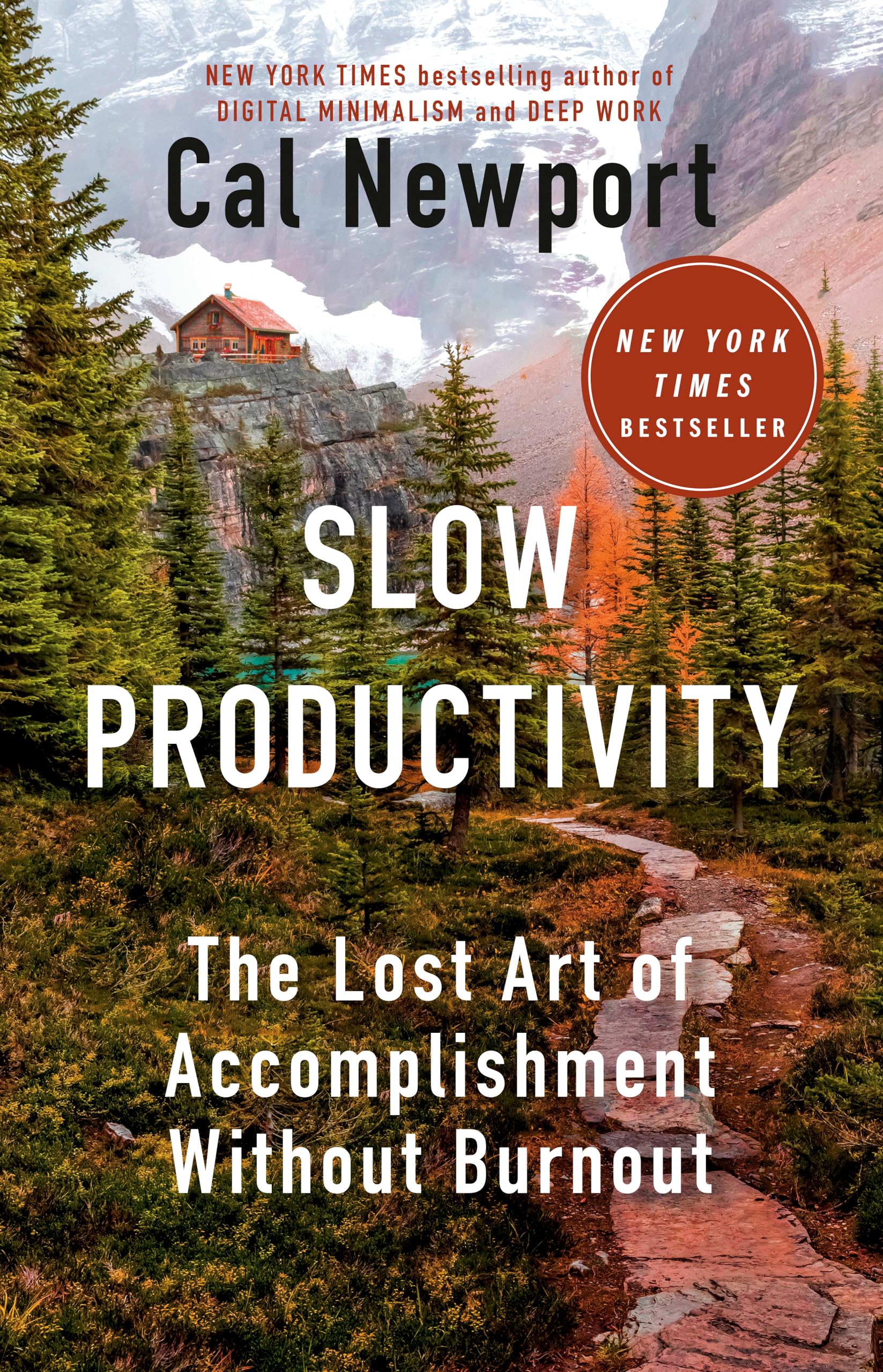
Image of the book cover

Cal Newport’s book Slow Productivity: The Lost Art of Accomplishment Without Burnout provides sound reasoning for slowing down and diving deeply into our work. I added this book to my reading list because our world needs more guidelines for meaningful focus now. As a writer working to strengthen my craft, I’m on the lookout for alternatives to hacks and get-it-all-done-quickly schemes.

Newport argues for slow productivity, which is achieved through three principles:

Do fewer things.

Work at a natural pace.

Obsess over quality.

What I liked about this book: I enjoyed gaining insight into the practices of people in diverse fields, from mathematicians to musicians, including the writer John McPhee’s deep focus on the craft of writing.

Newport notes that we should be ambitious: “Humans derive great satisfaction from being good at what they do and producing useful things.” He argues we should choose things we are truly passionate about, and those “fewer things” will transform into meaningful work.

Newport considers what it means to follow alternative guidelines to the status quo; productivity does not always come forth consistently. We need breaks, time, reflection, and research to find our paths to inspiration.

I did grow concerned about reading the “Obsess Over Quality” section because the perils of perfectionism can be destructive and impede the value of meaningful work. I know this all too well! Newport offers this sound advice: “Obsession requires you to get lost in your head, convinced you that you can do just a little bit better given some more time. Greatness requires the ability to subsequently pull yourself out of your self-critical reverie before it’s too late.” Obsession with quality should be reasoned, measured–timing matters. I think we can all relate to those moments when we realize we’ve done meaningful work and should step back without ruining what we’ve created.

If I’m going to find fault with this book, it is with the uncomfortable truth that success is not a given. To be clear, Newport correctly doesn’t instill magical thinking; he doesn’t promise dazzling results, yet some of the stories could be tempered with reality. For example, he shares the inspirational story of Stephenie Meyer, the author of the wildly popular YA book series Twilight. She had to balance the needs of her young children with her writing career. Writing at night after her kids went to bed brought success, and she went on to become a best-selling author. Her deep work ethic helped her, but let’s face it, luck also played a part. I’m not trying to be a downer on potential futures, but talent and meaningful work alone cannot guarantee success in creative fields (or any fields, for that matter).

Slow Productivity is worth a read and a reminder that better paths can lead us away from the unsatisfying, overscheduled lives many of us live. Digging deeply into those things that matter to us might, indeed, bring success someday.