Slow Productivity–A Review

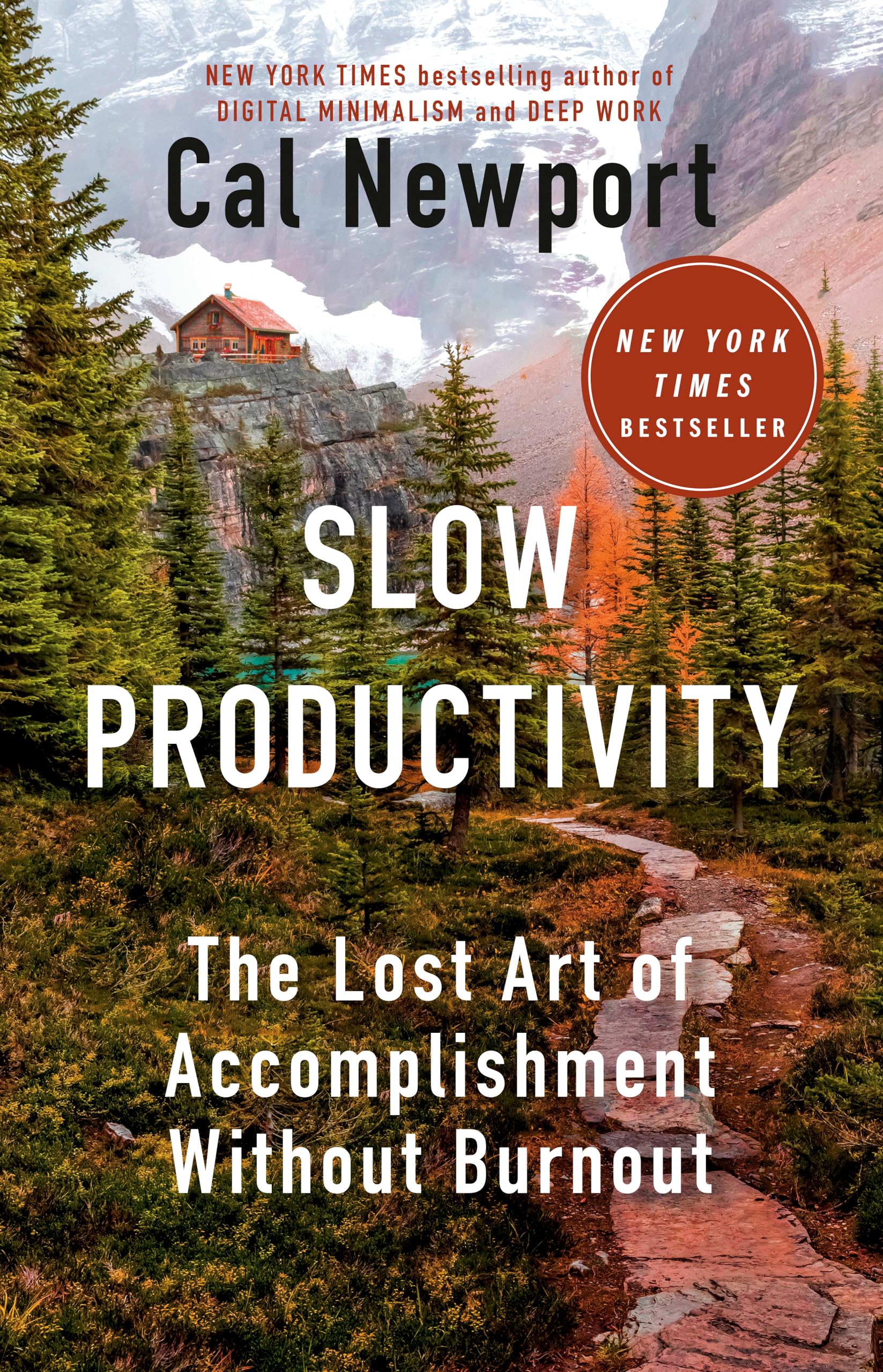
Image of the book cover

Cal Newport’s book Slow Productivity: The Lost Art of Accomplishment Without Burnout provides sound reasoning for slowing down and diving deeply into our work. I added this book to my reading list because our world needs more guidelines for meaningful focus now. As a writer working to strengthen my craft, I’m on the lookout for alternatives to hacks and get-it-all-done-quickly schemes.

Newport argues for slow productivity, which is achieved through three principles:

Do fewer things.

Work at a natural pace.

Obsess over quality.

What I liked about this book: I enjoyed gaining insight into the practices of people in diverse fields, from mathematicians to musicians, including the writer John McPhee’s deep focus on the craft of writing.

Newport notes that we should be ambitious: “Humans derive great satisfaction from being good at what they do and producing useful things.” He argues we should choose things we are truly passionate about, and those “fewer things” will transform into meaningful work.

Newport considers what it means to follow alternative guidelines to the status quo; productivity does not always come forth consistently. We need breaks, time, reflection, and research to find our paths to inspiration.

I did grow concerned about reading the “Obsess Over Quality” section because the perils of perfectionism can be destructive and impede the value of meaningful work. I know this all too well! Newport offers this sound advice: “Obsession requires you to get lost in your head, convinced you that you can do just a little bit better given some more time. Greatness requires the ability to subsequently pull yourself out of your self-critical reverie before it’s too late.” Obsession with quality should be reasoned, measured–timing matters. I think we can all relate to those moments when we realize we’ve done meaningful work and should step back without ruining what we’ve created.

If I’m going to find fault with this book, it is with the uncomfortable truth that success is not a given. To be clear, Newport correctly doesn’t instill magical thinking; he doesn’t promise dazzling results, yet some of the stories could be tempered with reality. For example, he shares the inspirational story of Stephenie Meyer, the author of the wildly popular YA book series Twilight. She had to balance the needs of her young children with her writing career. Writing at night after her kids went to bed brought success, and she went on to become a best-selling author. Her deep work ethic helped her, but let’s face it, luck also played a part. I’m not trying to be a downer on potential futures, but talent and meaningful work alone cannot guarantee success in creative fields (or any fields, for that matter).

Slow Productivity is worth a read and a reminder that better paths can lead us away from the unsatisfying, overscheduled lives many of us live. Digging deeply into those things that matter to us might, indeed, bring success someday.

Right To Read

We have a right to read,

We have a right to appear 

make new friends

discover places never known before.

We have a right to climb aboard

slip through the clouds

and visit other impossible worlds.

We have a right to laugh,

Shed sad tears, 

Breathe faster as we flip the pages–

We have a right to know

as our hearts beat together 

We have the right to read!  

M.M. Griskey 

7 April 2025

Cool Clouds

More Tropes, Please!

Murder, She Writes

Blame it on the horrors of U.S. politics or the icky weather, but I’ve been hungry for my favorite escapist activity more than usual . . .

Reading, of course.

I recently finished The Blonde Identity by Ally Carter and enjoyed every sentence! A number of years ago, I read Carter’s YA spy series, Gallagher Girls. Her new series (I hope) is a adult female and romantic take on the best tropes of the spy genre.

The story starts where an unnamed women wakes up on a snowy street in Paris. A handsome yet grumpy guy is telling her to run because (surprise) many people are trying to kill her. It turns out she has a twin sister who is a wanted spy!

What follows is an adventure with over-the-top escapes, disguises, explosions–oh, and, of course, romance!

Throughout the adventure, the protagonist brings the classic spy tropes to the readers’ attention (there is a reason why she knows these so well). I don’t want to give that away, but the puzzle pieces will all come together.. The book takes on a kind of meta-spy story feel. Humor, hijinks, and, of course, the growing feelings between the protagonist and the hot spy guy lead to satisfying conclusions.

I adore the way Carter manages to play with all the predicable spy tropes by upturning them in clever ways.

I recommend you read this fun book to help you escape from the world right now.

Meanness

Murder, She Writes

I have a challenge when I write.

I’m writing along, and I hear something I dread. My fingers pause. A lumpy troll crawls out from under the imagination bridge with a low growl. The troll smells terrible, like rotting broccoli and decaying crabs. The troll drops down in the middle of the road, growling and pounding boulder fists.

I’m stuck

I can’t think!

It seems silly, really . . .

No, I mean it.

The troll creator? Me! My problem is that I’m not mean enough. I’m too nice . . . a people pleaser if you please. I create a character, a protagonist I plan on sticking with for the duration of the writing project. Someone I come to know, to understand. Someone I like. Not a troll.

A good story has conflict. Or, one could argue a story must have conflict or it isn’t a story.

I grow to like my character so much, I don’t want anything bad to happen. No, I’m not kidding! This makes for a rather dull story, with or without trolls.

I apologize to my character. “You are about to face the most challenging experience in your made-up existence. This will test you in ways you never thought possible. You will endure experiences that will push you to the limit of your strengths–intellectual, emotional, physical. Yes, I am going to make you go through this! In the end, however, you will find yourself transformed in a way that makes you a much stronger person and provides the readers of this book a chance to experience this with you and feel your triumph in the end.”

This isn’t an easy sell. The character complains; they cry. I cry. I feel guilty, but I push forward for the good of the story.

I nudge that lumpy, stinky troll of stuck-ness off the road. The story moves on.

In the end, we’re better off. The character’s journey has twists and drops; hairpin turns and high vistas; chocolate nights and spun gold days. The story ends, and the road appears for the next adventure. The troll slumbers under the bridge.

The bridge on Channel Road in December

Going to the Dogs

Murder, She Writes

Art by Laura Catalán

In need of something that had nothing to do with the state of the world, I found Wendelin Van Draanen’s recent middle grade mystery, Mr. Whiskers and the Shennanigin Sisters, and entered a world of an old, mysterious house (with secret passages!), two tenacious sisters, a father gone missing, pirate treasures and more–all told through the unique perspective of a dog. That’s right. This book is from a dog’s point of view.

Not just any dog, but a clever, street-smart, and all-around good boy.

Van Draanen is a popular writer who has published many children’s books, including the popular Sammy Keyes series. Her mastery of the middle grade is evident in this story. When Misty and Zelda’s dad gets ordered away by some suspiciously bogus FBI agents, it’s up to Mr. Whiskers and the sisters to save the day. In an old San Francisco boarding house where the sisters live, they find clues and old pirate secrets that lead them to their dad.

The voice of Mr. Whiskers was especially fun because Van Draanen creates an authentic sense of a dog’s point of view with some creative woofy puns. Obviously, this dog is not the only animal perspective in middle grade, but I found it interesting here because Mr. Whiskers must interact with humans, who do not always understand his clever insights.

The book begins with a whiff of danger:

I smelled trouble. It came driftin’ in off a fella on the sidewalk outside and tickled up my schnoz clear down to my paws

I hope this one becomes a series!

The Red Palace

Murder, She Writes

I was fortunate enough to recently receive some feedback on my writing from Kat Brzozowski (Senior Editor at Feiwell & Friends), she mentioned I should read The Red Palace, by June Hur. I’m so glad I did!

Hur’s YA historical mystery takes place in Korea in the year 1758. Hur’s lyrical prose pulls the reader right into the story without needing to explain everything. Though this era in history was previously unfamiliar to me, I was able to slide into this world through Hur’s effortless style. Of course, I doubt it was effortless (writing is hard!), but it felt effortless.

The protagonist, Hyeon works as a palace nurse, and when her mentor is accused of killing multiple women, Hyeon is called into action; despite warnings that she should stay out of trouble, she investigates to find the real killer. There are layers of challenges–a strict socioeconomic system, specific gender roles, and family complications. The clues lead the characters to believe that the Crown Prince could be responsible for the murders, which further complicates the story.

Along the way, Hyeon joins forces with Eojin, a police inspector and a romance flourishes. Hyeon and Eojin must work together to find the truth and put themselves in great danger.

The story has satisfying plot twists, unique settings, a fascinating social history, and a budding romance.

A unique and wonderful read with universal themes!

Needing a Little Humor?

Murder, She Writes

I needed a little humor in my life.

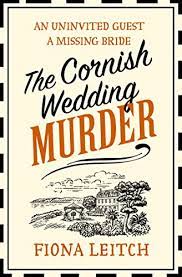
Fortunately, I discovered The Cornish Wedding Murder by Fiona Leitch. As the title implies, something goes terribly wrong at a wedding . . . well right before the wedding. Jodie (Nosey) Parker has left policing in London at the Met to raise her daughter, Daisy in the quaint seaside town of Penstowan where Jodie grew up. With a new career to try out, Jodie’s first job is to cater an ex-boyfriend’s upcoming wedding, but things do not go exactly as planned. When the groom’s ex-wife is murdered and the bride-to-be goes missing, Jodie’s sleuthing skills emerge and she’s on the chase.

To complicate matters is an attractive but stern Detective Inspector who doesn’t initially appreciate Jodie butting into his investigation. Needless to say, the sparks fly . . .

Leitch has a number of witty lines.

. . . he should be in a Hallmark movie wearing a lumberjack shirt and running a pumpkin farm somewhere in the Midwest. The midwest of America, obviously. The mid-west of England would be Birmingham, which wasn’t known for either its romantic heroes or its cucurbit agriculture.

Fiona Leitch

The plot has satisfying twists as we are engaged from the start attempting to figure out the murder and what the heck happened to the future bride. There are great clues, suspicious characters, and a sweet setting.

Let’s not forget the food! This book has strong descriptive passages about tasty meals, something I love in a cozy mystery.

There are six books published in this series so far. This should supply many much-needed laughs in the months to come.

To Catch a Heart

Murder, She Writes

Back from a trip to California . . .

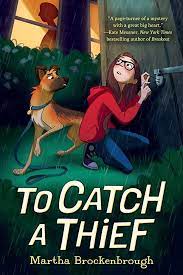
I recently read Martha Brockenbrough’s sweet middle grade mystery novel, To Catch a Thief.

The story unfolds when an unknown thief steals a dragonfly staff, an important and reportedly lucky artifact for the quaint town of Urchin Beach. Amelia MacGuffin decides she will use her detective skills to find out who is behind the missing staff (and a number of other items that disappear).

To complicate matters, a major storm hits the community, odd new neighbors show up, and the MacGuffin children rescue a sweet dog that they probably will not be able to keep because their family cannot afford a pet.

I love the seaside town setting, and this book has heaps of fun characters: Dr. Agatha, the reclusive mystery writer; Dot and Dash, the new 7th-grade Morse-code-expert twins; Birdie, a student journalist, and even a grumpy real estate agent named Mike Jung (who interestingly shares the same name as a writer I met once . . .).

In fact, all sorts of writers are mentioned like Kekla Magoon, William Alexander, Linda Urban, Olugbemisola Rhuday-Perkovich, Kelly Barnhill, Anne Ursu, Laurel Snyder, Laura Ruby, Tracey Baptiste . . .

Writers who write books Amelia, her siblings, and even her dad love to read.

Amelia hoped she would grow up to be the kind of grown-up who remembered that kids know what’s good and not boring.

Martha Brockenbrough

At the core of this sweet mystery is the MacGuffin family: Amelia, and her younger siblings–Bridget, Colin, and the twins, Duncan and Emma.

I’m a big fan of Martha’s books. Her works include masterful syntax, funny dialogue, and strong plots, but most of all, she understands the emotional core of her characters. In this case, Ameilia realizes what is truly important in her world and this emotional core to the story feels completely authentic.

Like Mr. MacGuffin, I still read plenty of books for younger readers. What would 10-year-old Michèle have thought of this book? Would I have liked it? Oh, yes!

I really hope the adventures of Amelia and her crew will become a series!

Canadian Adventures

Murder, She Writes

Design and Illustration by Margaret Hanson

I recently stumbled across a delightful series from British Columbia, the Lane Winslow mysteries by Iona Wishaw. This series has many tempting boxes to check: The setting, the historical era, the characters, and of course, twisty plots!

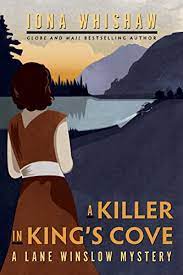
A Killer in King’s Cove begins in 1946 near Nelson, BC, we meet Lane Winslow, who left England and recently purchased a charming old house in King’s Cover where she plans to write and garden, but when a body turns up, her new peaceful life gets a tad more challenging. Lane worked as a British Intelligence officer in WWII and is mending from a broken heart and the horrors of war. Nevertheless, she is clearly a modern woman. She will not swoon at the sight of a corpse, and she’s persistent with coaxing seemly subtle clues that eventually reveal answers.

Other characters include eclectic neighbors and the attractive but aloof police detective, Inspector Darling, who tries to resist the allure of the beautiful and brilliant new resident. This slow-burn relationship builds with the series, as the two characters realize they cannot deny their connection.

I like Winshaw’s commitment to historical details; she’s clearly done her research. I also like the strong point-of-view shifts that build scene by scene as readers are introduced to other characters and other puzzle pieces of the plot. Like a focus on a lens, the story suddenly comes into view.

I’m eager to read more books in this series!

Gaudy Feelings

Murder, She Writes

I’m heading back in time to one of my favorite writers from the heyday of British detective fiction, Dorothy L. Sayers. The protagonist in Sayers’ novels is Lord Peter Wimsey, an intelligent, wealthy British nobleman veteran who suffers from bouts of PTSD when he isn’t solving mysteries.

Harriet Vane, a mystery writer, and Wimsey’s love interest, first shows up in Strong Poison, where she is accused of her lover’s murder until Wimsey figures out what really happened. Wimsey wants to marry her, but she hesitates to marry him for a number of reasons, both rational and irrational.

Gaudy Nights takes place at Oxford University in the fictional women’s college, Shrewsbury. Harriet Vane reluctantly returns to an annual reunion, called a Gaudy at the request of an ill former classmate. Soon she is engrossed in a mystery at the college, where a poisoned pen writer is sending out hateful messages to students and faculty. This mystery Harriet works on methodically and with an intellect not often seen in female characters of the era.

In all her novels, Sayers considers the psychology of our experiences–love, shame, anger, guilt, and more. Gaudy Nights, in particular, provides plenty of opportunities for Harriet Vane’s perspective on the roles of women, marriage, her own role in marriage (if she were to marry Wimsey), and the challenges of being attracted to someone while concerned about the long-term outcomes of where attraction can lead. Will she lose her sense of self?

I enjoy the banter and intellectual interactions between Vane and Wimsey. As the story evolves, the mystery of the person behind the poisoned pen notes and all-around mischief-maker grows increasingly dangerous. Sayers was a master at complex plots with heaps of clues in multiple directions; that is one of the many reasons I find her novels worthwhile.

Though Sayer asserts a critical view of the treatment of women, especially intellectual women, there are some classic male and female tropes. Considering the publication date of 1935, the underlying stereotypes represent a reflection of the era. With that said, Wimsey is one of the early detective characters who evolves over time as a complex human, not merely a bright and witty rich guy. Vane’s leading role in this novel demonstrates Sayer’s understanding that a woman’s perspective is as valuable as a man’s.

“What are you to do with the people who are cursed with both hearts and brains?”

Doorothy L. Sayers

There is a solution, but I will not give it away!